
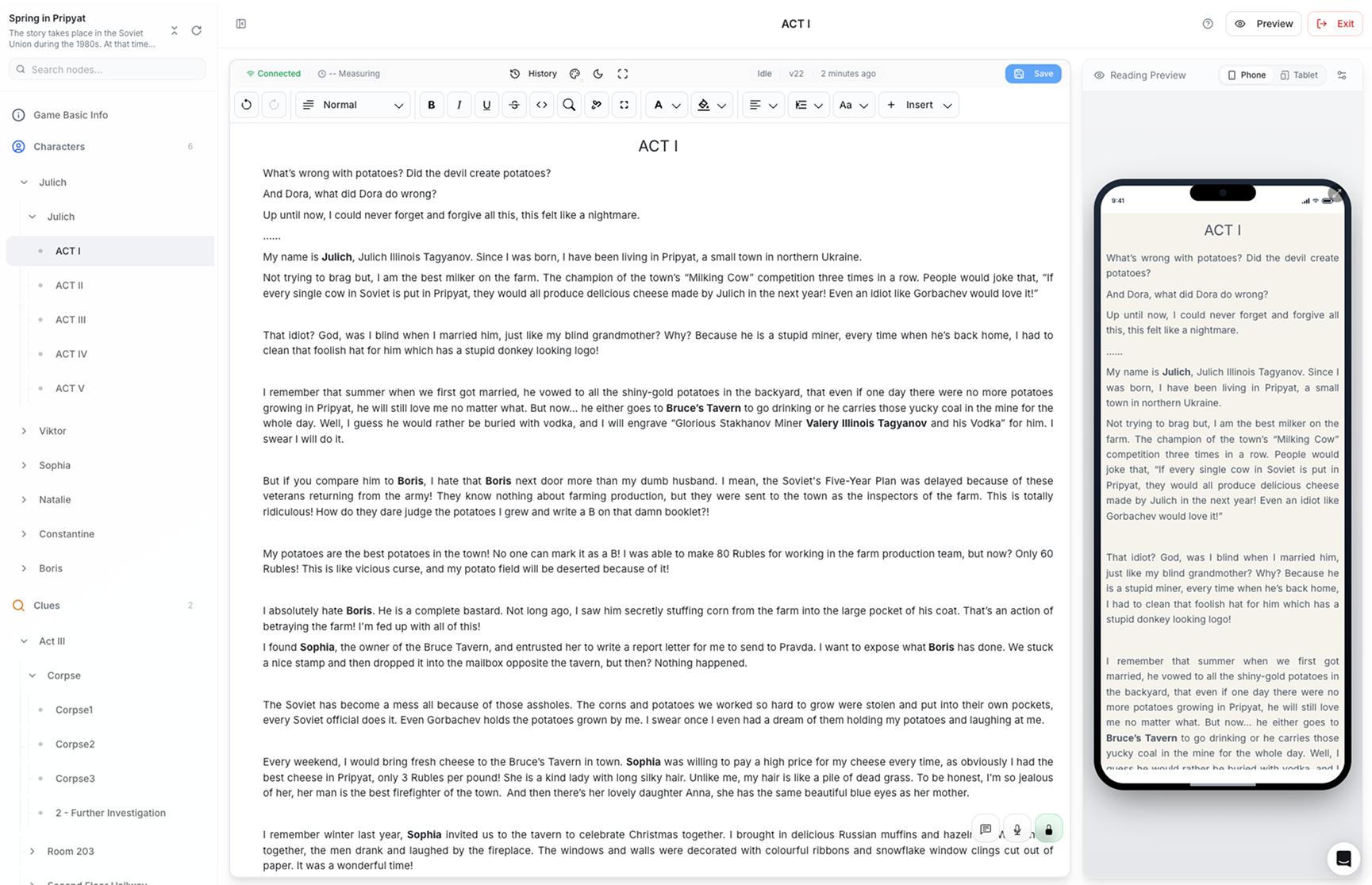
Write the story, shape its characters, relationships and interactions, and prepare the work for others to host and play.
About Anzir StudioJubensha · Shared stories
Gather your friends, step into different characters and experience a story together through conversation, interaction and choices.
See what players doAround the table
A story shared around the table
Jubensha, in one sentence
Jubensha is a shared, interactive story experience. A script introduces you to a character, and you meet others inside the same story—talking, interacting and making choices as you experience it together.
Explore relationships and emotions, cooperate or compete, or share a night of laughter. Drama, comedy, factions and deduction offer different ways to play, depending on the work you choose.
From the first page to the final conversation
Get to know your character, then experience the story through interaction. These stages are a common guide; follow your chosen work for the actual order and rules.
Check the player count, duration, reading language and themes. Agree on a work that suits everyone and confirm any Game Master requirements.
Read your character’s history, relationships and opening scene. Understand their situation and any objectives the work gives you.
Talk and act as the story unfolds. You might share an emotional scene, cooperate on a goal, compete in factions or investigate a mystery.
Make decisions or complete objectives as the work directs. Some experiences focus on relationships and emotion, others on strategy or deduction. Not every work ends with a vote.
Talk about your characters, memorable moments and the choices you made. Where the work includes mysteries or hidden events, follow its guidance for the debrief.
This is a guide, not a universal ruleset. Player count, timing, Game Master needs, communication tools and ending conditions vary by work.
Watch the introduction
A short introduction to shared stories, play and the tools around them. Follow your chosen work’s instructions for its actual rules.
Six common styles
Start with the experience your group wants, then find a story that fits.
Step into a character’s life and relationships. Experience friendship, family or love through moments of joy, regret and connection with the other characters.
Think group games woven into a story. Playful tasks, lighthearted interaction and clashing personalities give your group plenty to laugh about together.
Investigate a murder mystery or another puzzle at the heart of the story. Examine clues, discuss motives and reconstruct events as your group works towards an answer.
Suspense, atmosphere and story create a sense of tension. Face the unknown with your group and experience your characters’ fear and courage from within the story.
Think board games woven into a story. Resources, abilities, tasks or turn-based rules create opportunities to cooperate, compete and plan your next move.
Think Werewolf woven into a story. Characters have different allegiances and goals. Talk, form alliances, read the group and compete for your side’s objectives.
A work can blend several styles. Check its description for the themes, interactions and intensity of the experience.
Three ways to gather
At a venue, at home or together online. Choose a setting that fits the work’s hosting, performance and equipment needs.
Some works call for a professional Game Master, performers playing supporting characters (NPCs), or costumes, props, lighting and music. A specialist Jubensha venue is often the best fit for that setup.
Works that need less equipment or live performance can suit a gathering at home. A friend can follow the hosting guide, and some works need no Game Master at all.
For works designed for online play, join from different locations and talk through Discord or another communication tool. Read your roles, interact and follow the story as the work directs, even when your friends are far away.
Check the work’s supported play format, Game Master requirements and preparation list before making plans.
Try a character’s perspective
An old theatre is about to close. Before its final performance, three old friends reunite and decide how to spend this last evening together.
An original fictional example to explain the idea. This is not a playable work or a spoiler from the Library.
Choose a character to see what matters to them in this farewell.
What matters to you
You want the farewell performance to go well and leave everyone with a good memory of the theatre. You’ve been so busy organising it that you haven’t had time to say goodbye.
One farewell means different things to each character. What would you say, how would you respond to your friends, and what memory would you want to leave together? These conversations and choices are part of the experience. This is one possible style of play; each work sets its own rules.
The people behind the experience
Authors and publishers create the work. Venues and Game Masters bring the session together. Players bring their characters to life.
Write the story, shape its characters, relationships and interactions, and prepare the work for others to host and play.
About Anzir Studio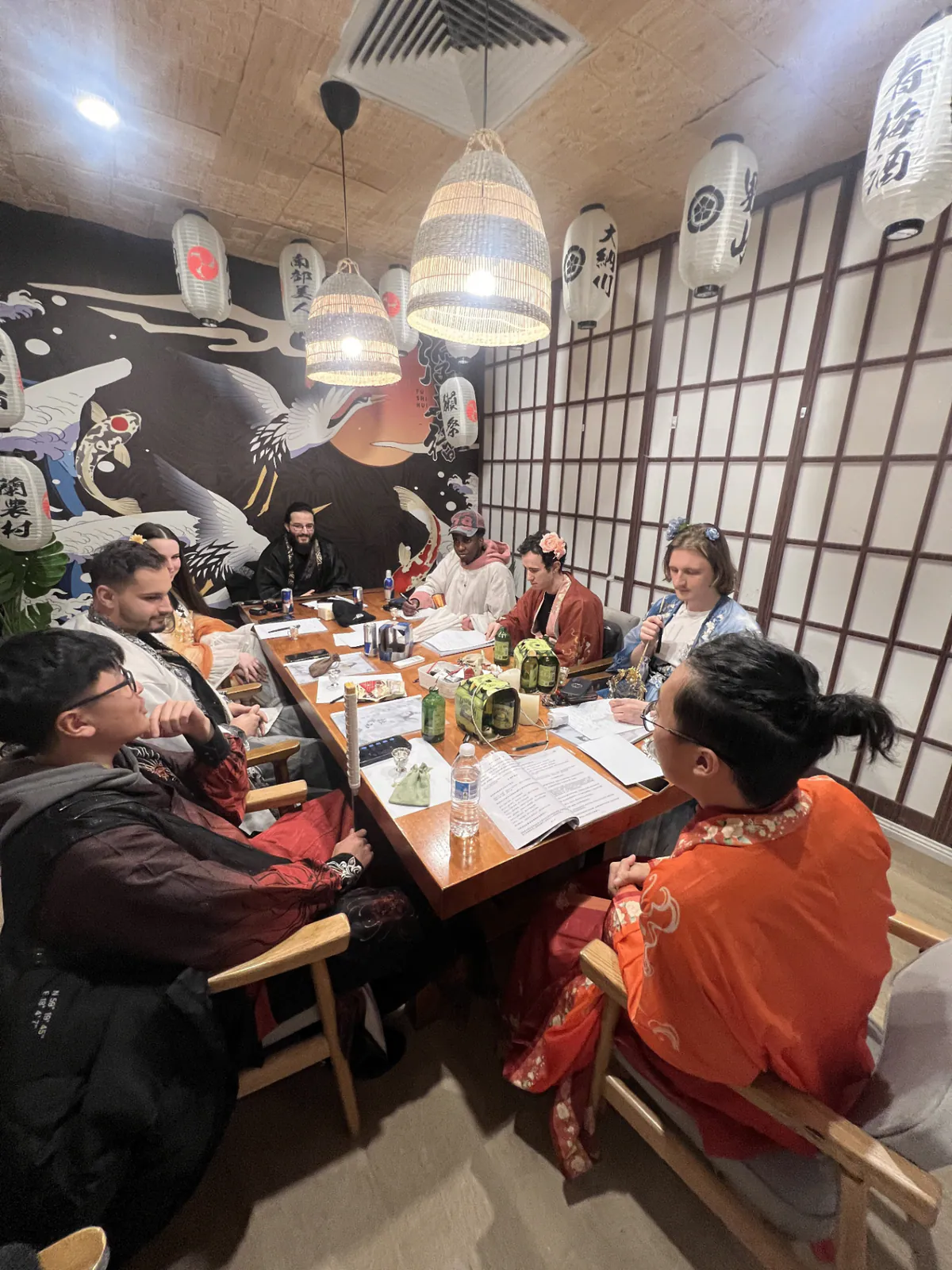
Choose a work, welcome the group and guide the session. Explain the rules, manage the pace and help everyone take part.
Explore venue partnerships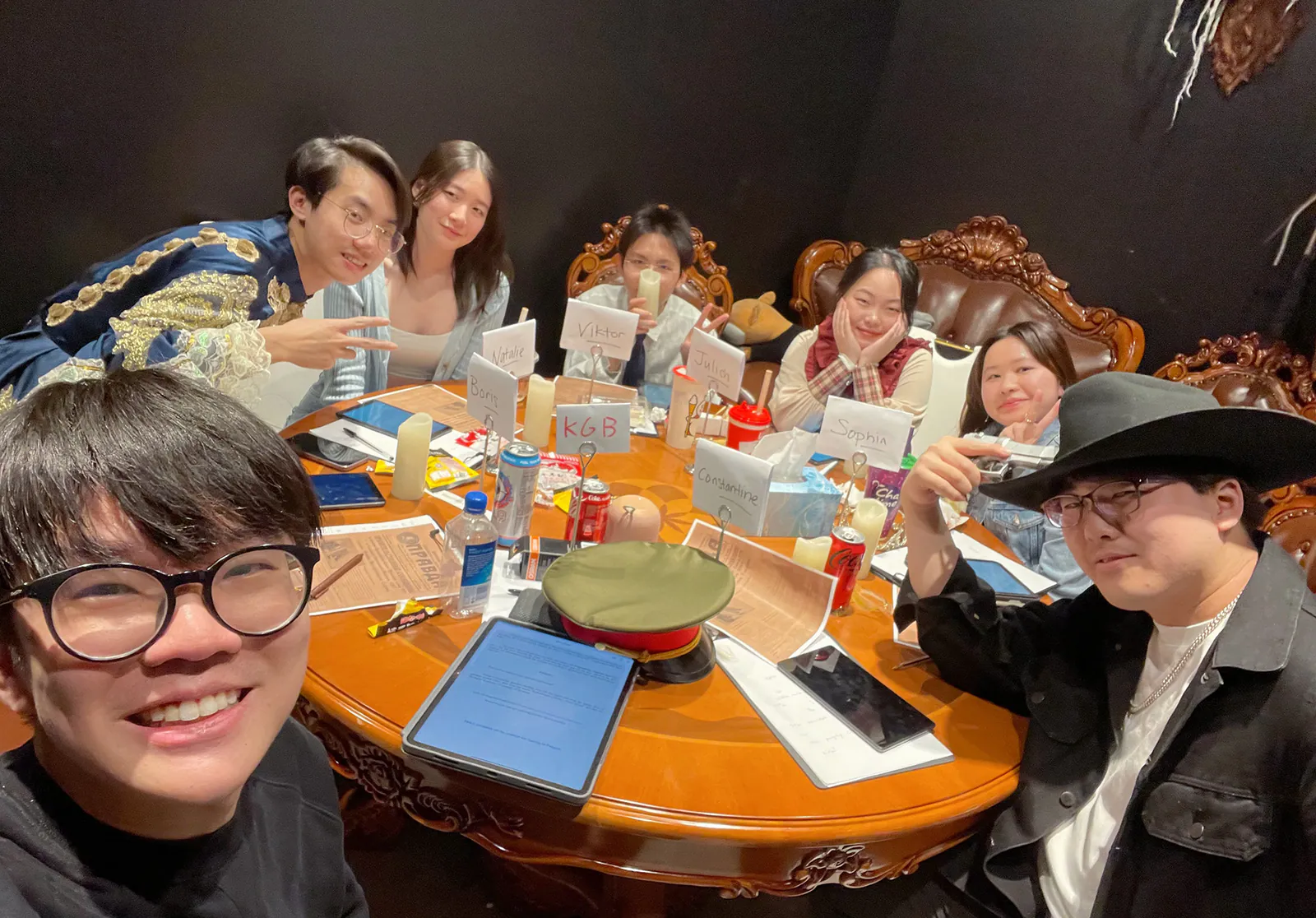
Step into a character and experience the story with others through reading, conversation, interaction and choices.
Find a Jubensha to playBefore your first session
Jubensha, D&D, board games, murder mysteries and Werewolf share elements of tabletop play and roleplaying. The comparisons below describe their usual emphasis, with plenty of overlap between them.
Jubensha usually brings an agreed group together for a long, continuous story experience. Each character can affect everyone else’s scenes and interactions. Think of a team game that needs its whole lineup: arriving late, going AFK or leaving early can disrupt the experience for everyone, and may make it impossible to continue. Check the duration, reserve the full time and arrive punctually. Stay involved as you play. Coordinate breaks with your Game Master and group. If an emergency means you must leave, let everyone know as early as possible so you can agree on what to do.
Both can work. We recommend gathering friends you already know, especially for a first session. Jubensha usually takes several hours, and knowing each other can make conversation, roleplay and agreeing on preferences more comfortable. Joining people you don’t know can also be a way to meet new friends. Before committing, check the language, themes, duration, style of interaction and the group’s expectations.
As with films, Jubensha spans different genres, styles and values. Some works focus on emotion, others on comedy, strategy or deduction. Characters’ viewpoints, emotional intensity and ways of interacting can appeal to different people. Read the description, genre and content guidance, then discuss what your group wants to experience or avoid. Enjoying one work does not mean you will enjoy every style.
Both combine characters, stories and rules, and they overlap. D&D generally gives players and the Dungeon Master (DM) more open-ended choices. The DM responds and improvises as players act, and can also use a prewritten adventure. Jubensha usually provides more fully prepared characters, relationships, story material and a session structure. This can reduce the amount of story a Game Master needs to invent on the spot. Some works still depend heavily on professional hosting or performance; it does not mean every work can run without a Game Master.
A murder mystery usually centres on a case, clues and identifying the culprit. It can be one kind of Jubensha experience. Jubensha also includes drama, comedy, horror, strategy and faction stories, so a murder case is one possible theme. Many Jubensha works use a Game Master, character relationships, atmosphere or performance to deepen immersion. Murder mysteries can use these too. The formats overlap; check how the individual work is written and hosted.
Broadly, Jubensha can be understood as a kind of tabletop game. Many board games focus on mechanics, strategy and repeated play. Jubensha usually puts more emphasis on prepared content, characters and experiencing a complete story. Like watching a film, discovering it for the first time is often an important part of the experience. The boundaries overlap. Strategy-focused Jubensha can include strong board-game elements, and some works support replay. It depends on the design.
Werewolf usually centres on hidden identities, faction deduction, discussion and voting, with fresh social dynamics and strategies in each round. Faction-based Jubensha can use these elements while weaving character goals and relationships into a fuller written story. Think of faction-based Jubensha as Werewolf-style interaction combined with a story. It is one of several ways to experience Jubensha.
No professional acting experience is needed. Start by reading your role, listening and talking naturally. The amount of performance, reading and deduction varies, so check the work and discuss your preferences with your group or Game Master.
There is no single number or session length. Check the player count and estimated duration on the work’s detail page, then confirm the arrangements with your group or venue. Leave time to read and discuss the ending.
Requirements vary. Some works require a Game Master to guide the session; others have a different setup. Follow the selected work’s instructions and confirm with the venue if you are playing there.
Check with a venue about its sessions and whether it can accommodate an individual player. Availability and arrangements depend on the venue.
Avoid reading or sharing solutions, hidden identities and key twists before others have played. Whether a work supports replay depends on its design and instructions. Share a spoiler-free impression instead.
Find your first work
Check the required number of players and estimated duration before making plans.
Choose a reading language everyone is comfortable with and a style of play you want to try.
Read the content guidance and Game Master requirements. Confirm the setup with your group or venue.
Have a story of your own? Anzir Studio provides tools to write, organise and test your work.
Go to Anzir Studio